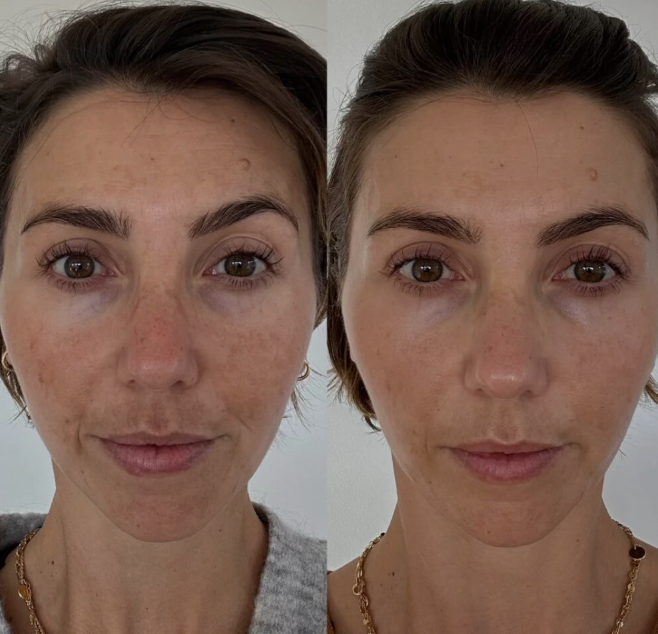
Microneedling might sound intimidating, but it’s actually one of the most trusted and dermatologist-approved skin rejuvenation methods available today.
It works by using ultra-fine, medical-grade needles to create micro-channels on the skin’s surface. These channels are tiny, virtually invisible to the naked eye, but powerful enough to trigger your skin’s natural repair process.
This encourages collagen and elastin production in the dermis, helping your skin heal from the inside out.
“Microneedling is one of the most effective non-invasive treatments we have to reverse visible signs of aging. It stimulates the skin’s natural healing response and boosts collagen where creams can’t reach.”
— Dr. Lena Morris, Board-Certified Dermatologist
“I recommend microneedling to patients dealing with acne scars, enlarged pores, or fine lines. It’s safe, versatile, and delivers results without the risks of more aggressive procedures.”
— Dr. Sarah Khan, MD, Aesthetic Medicine Specialist
One of the biggest mistakes people make is trusting the wrong microneedling tools.
At-home microneedling has exploded in popularity, but not all devices are created equal.
In fact, most cheap rollers or knockoff pens can do more harm than good:
– ❌ Uneven needle depth
– ❌ Blunt or low-quality needles that scratch instead of puncture
– ❌ No speed or depth control
– ❌ Risk of infection from poor sanitation or reusable parts
These tools can irritate your skin, cause microtears, or introduce bacteria, leading to redness, sensitivity, and breakouts rather than the glow you were hoping for.